Friday, February 5, 2021

The Birth of the Emoticon

By Chloe Brussard

    Emotion is an important part of understanding. Understanding how someone is feeling, by their facial expressions, by the tone of their voice, by their body language. But how can you tell someone's emotion if you aren't with them? If your means of communicating with them is through text or email or even letter? The answer is you can't. Well, at least not anytime before September 17, 1982.

    On September 17, 1982, Dr. Scott Fahlman was communicating with some work colleagues on a discussion board. The conversation quickly turned humorous, and everyone wanted to put a thought of their own in there. The problem was, sometimes one of the members would be serious, but you couldn't tell because those messages sound monotone in the readers heads. 


    Some people suggested putting an asterisk (*) next to the messages that were supposed to be funny. But it was Dr. Fahlman who suggested putting :-) next to the messages that were funny and :-( that were the messages that were not jokes. And thus, the emoticon was born.

      I don't think that even Fahlman could have predicted the effect that the emoticon has on modern day technological communication. The fact that people can now include emotion in their online messaging is incredible. And now, so many new emojis have come out of the simple smiley and frowny emoticons. 

    Now, there is a difference between an emoticon and an an emoji. An emoticon is a face that is created with characters of a keyboard, like a semi colan, a parenthesis, a dash, etc. while an emoji is a face that a device has on it for you. Emoticon is a mix between the words emotion and icon. It allows for emotion to travel over the internet via icons. Some devices even automatically change an emoticon to an emoji, for example Apple. If you were to type in :), it would convert to this 😊. 


    There is a big change in meaning between the phrases "I am just soooooo glad that you are coming" and "I am just sooooo glad that you are coming 😁". The first phrase sounds sarcastic, with the excess of O's. And that tends to be the case with a lot of phrases that lack emoticons. Adding the emoticon is like adding your own personal emotion into the text, and it helps the receiver have a better understanding of what the sender is trying to say.

    It might not seem like much, adding a little face at the end of a message, but it can make all the difference in the world. If someone is having a bad day and they are looking for support from a friend, and they receive the message "Don't worry, you'll be fine" they could see that as being a harsh message, like their friend is telling them to get over it. But the message "Don't worry, you'll be fine :)" carries a whole new message. Those two characters at the end of the sentence show support, rather than a harshness like the first sentence did.


    Who could have possible seen the evolution the emoticons to emojis? I don't think that is what Fahlman expected his idea to turn into. There are now over 100 emojis that people use on a regular basis, like a laughing emoji, a throwing up emoji, a kissing emoji, a sad emoji, and so much more. There are animals, flags, athletes, buildings and food emojis too! 


    Although a seemingly irrelevant technological advance, imagine a world without emoticons. Dr. Fahlman unknowingly made an advancement in technology. How many people get to say they did that? It's not like he invented the internet or the radio, but that doesn't make his discovery any less of a wonder. Without them, emojis would not be a thing, and some meanings exchanged over text could be lost in translation.

Monday, February 1, 2021

The Value of Free Expression: Stable Change

 By Chloe Brussard


Freedom of Speech - the right of people to express their opinions publicly without governmental interference, subject to the laws against libel, incitement to violence or rebellion. 

    It is often thought that having freedom of speech allows anyone to say anything without consequence. That they could use derogatory language towards someone and have no repercussions. But that just isn't the case. Even if what you are saying is demeaning in some way, if it doesn't cause incitement, then the government can't technically do anything to you.


Incitement - to stir, encourage, or urge on; stimulate or prompt to action.

    On the other hand, if that speech does cause incitement (i.e. riots or looting), not even the 1st Amendment can help you. Incitement is a kind of action that is unprotected, meaning that the Constitution cannot help protect your rights. Having the freedom to speak your mind is one thing, but using that speech to incite and rile up a group of people who then use your words to complete acts of violence is under a whole other category.


Expressive Action - an action to convey a message to an audience. 

    It is completely possible for a group of people to  protest legally. First, one must obtain a permit for the space they are using. The people there cannot be charged because they are using that space legally. But, once the general public becomes endangered, it is no longer expressive action. One of the Freedoms of the 1st Amendment is the right to assemble. But what comes in parenthesis next to it is that it must be peaceable. When the public becomes endangered, the protest becomes not peaceable, which is a something that cannot be protected by the government. 


    The reason for defining some terms before diving deeper into one of the Values of Free Expression is because each of those terms is an important part of Stable Change. Stable Change believes that a society that allows the governed to speak their minds will be a more stable society, where people do not resort to violence. 

    In order for this Value of Free Expression to work is because the Freedom of Speech clause in the 1st Amendment. Without the Freedom of Speech clause in the Constitution, expressing thoughts and ideas could essentially be illegal. The people have been given the right to speak their truths, but being able to do that does come with some terms.

    Like I mentioned before, incitement is speech that leads to negative actions. That kind of speech is not protected by the 1st Amendment, nor should it be. If everyone is allowed to say what they want, when they want to, that could lead to serious problems. Although speaking is not a tangible, physical thing, words hold so much power. But, if derogatory or violent speech is used but does not cause incitement, technically you are protected under the 1st Amendment. 

    But just because the government cannot legally do anything to you, that does not mean that they aren't still watching. This is where Stable Change comes into play. As the law gives the people freedom of speech, it also gives the government the power to monitor the people. If hate groups use their speech to discriminate against others but doesn't cause incitement, the government can keep them on a watch radar, with the knowledge that this is a group of people that needs to be watched. 

    Even though expressive action does not necessarily have to be actual speech, it is still an action that can be protected by the government. Using modern day examples, expressive speech includes, but is not limited to, sitting or kneeling for the American flag, peaceable protests, etc. Colin Kaepernick, former San Francisco 49ers quarterback, used his freedom of speech to peaceably protest police brutality and racial inequality. But not everyone saw it that way. What some people saw was an ungrateful man who was disrespecting his country. His action caused incitement, even if that was not his intention. Although he had the right to do that, he was black balled in the NFL and hasn't played since 2016. 

    Using that situation as a metaphor for the people and the governed, it shows just how much power the government has. It doesn't take much to cause incitement, but as soon as it does, the government cannot protect you, and therefore can hand out charges. 


    The line between freedom of speech and unprotected actions is very thin. But just because your speech is protected does not mean that the government won't be able to do anything to you. They watch and they wait. To allow people to speak freely gives the government more power than one would think. They only act in their own self interest, and they use that very fine line to rule over the people's Freedom of Speech. 


Sunday, January 31, 2021

Silence of the Anti-War Voices

 By Chloe Brussard

    After all the conflict that this country has endured, wouldn't you think that political officials would want to do everything they could do to prevent more war outbreaks with other countries? The amount of lives that have been lost thus far should be an indicator that we should be striving towards peace, instead of continuing wars where more people are killed. The amount of money that is being funded into the military is almost a trillion dollars. Imagine what else could be done with all that money. It could be dispersed among cities to help prevent homelessness, or it could help less privileged kids attend college and receive a higher level of education. Unfortunately, that does not seem to be the case.


    Anti-war journalists are being silenced. Their opinions and articles aren't being published in mainstream news. Instead, one of the most popular news topics that is broadcasted is war. They are not necessarily pro-war opinions, but they talk about what the U.S. military should be doing to gain advantages in the war, not what they should be doing to end it peacefully. 

    So if war is taking money and lives from the United States, why is it still promoted, unopposed? The answer is that it's not. There are plenty of anti-war sources but like I said before, they aren't in mainstream media. They are on obscure and hidden websites. Shouldn't the voices who are advocating for peace be the kinds of voices that people are hearing? Apparently not. 

    Looking back, it is not that difficult to find patterns within the U.S. economy. Maybe the greatest motivator of all time is (and probably will always be) money. With the amount of money that is being made from these wars, no wonder people want to continue promoting them. The money going being made from the creation of weapons and the money being filtered into 'special' U.S. government projects, people would think it absurd to stop these wars. But, people who think like that are valuing money over the lives of people. Not only their soldiers, but of innocent civilians who are being caught in the crossfires of these wars. 


    Mainstream media like social media apps, the news, newspapers, magazines, etc. are where people are receiving the majority, if not all, of their news. Those kinds of media are what influence peoples opinions. What they see and hear about the most is what they begin to believe and support. But if all they are seeing is news about creating weapons or training soldiers, then how would they know about the efforts of all these anti-war journalists? The answer is that they won't. Silencing these voices is like playing a card game. Except the dealer is showing and helping one player, while they are sabotaging the other player. In this case, the dealer is mainstream media, and the players are the pro-war voices and the anti-war voices. If we want to make a real difference and get anti-war opinions out, then we need to level the playing field, and deal each player a new hand. 

Wednesday, January 27, 2021

Are All Men Really Created Equal?

By Chloe Brussard


    One would think that when the Declaration of Independence states that "all men are created equal", they meant that everyone would be equal. But that simply is not the case. Women sometimes don't seem to be part of that "all" which is what provoked the Me Too movement.

    First presenting itself on social media in 2006 by Tarana Burke, the Me Too movement has evolved into something so powerful. This movement is a social movement against sexual abuse and sexual harassment where people expose allegations of sex crimes against them. For too long women have stayed silent, and let men walk all over them, whether it be in relationships or workplaces. Women used to just take the abuse that was handed to them because men used to be in charge of so many things. Men dominated workplaces and relationships. Plus, who would believe a women over a man? 

From/Of Religion

    This movement isn't necessarily about religion, but that doesn't mean that it isn't for some people. Some people might have faced religious discrimination, or violations of their religion. Me Too means something different to each person who has faced different kinds of abuse, so wouldn't it be unfair for someone to exclude your kind of abuse from a movement that is supposed to be all inclusive? Acceptance and equality is what this movement strives for, and the people who are apart of this movement understand what it is like to have faced abuse and harassment, which is why they would never do that to another person. 


Speech

    The goal of all these marches, signs, hashtags, etc is to be heard by someone. Some women have felt silenced for too long, and they are fed up. The court system has failed them too many times. Sharing their stories with each other and with the world is such a brave and courageous thing. They are sharing personal stories about their violations, and in so helping other people feel like they have a voice. This movement's point isn't to only criticize and call out the government, but also to help other people come forward and share their stories. 

Press

    Women march to create awareness. They want cameras, news stations, and journalists to see that they won't back down. That this is a fight that they will not forget about. Unfortunately, not all press is good press. 2%-10% of all sexual harassment reports are false allegations. When a false allegation is made, the press eat that up. They put that story in the spotlight for people to see, and gives a false impression that most of the reported sexual abuse allegations are false. The media should focus more on helping the victims rather than exploiting the liars.

Assembly

    New York City. Las Angeles. Boston. These are just a few of the cities that marches have been held. Meeting up in a big city with signs and stories is their right to assemble. Some of the victims have faced so much harassment and violence against them, that the last thing they would want to do is cause more violence. Why would they go to these cities and incite violence? They stand for peace and equality, and creating a violent march is against what they stand for. 

Petition

    In my notes I have written next to this: the right to talk back to the government. Do I think that the women who are apart of this movement have the right to talk back to the government? Men don't rule this world, but they seem to think they do. The majority of governmental positions are filled by older white men who believe that they know what is in the best interest of young women. Who are men to decide what to believe? So yes. I believe with all my heart that these protestors have the right to talk back to the government. 

    The Me Too movement is not exclusively for women. Men face sexual harassment and abuse too, but they seem to think that speaking up about it makes them seem weak. It does not. It makes them brave and strong and worthy. The backlash that they think they would get for speaking up would be from those who think themselves better than everyone else, and those opinions don't matter. What matters is that all the work that is put into this movement is going to make a change, whether it be through laws being passed, more victims coming forward, or creating awareness. No one should have to hold their troubles inside while the world goes on around them. People don't deserve that. they deserve to live their own life how they want to, without fear that their rights will be violated. 

Saturday, January 23, 2021

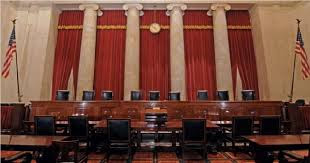
The Inner Workings of The Supreme Court

 By Chloe Brussard


    Written in 1787, the U.S. Constitution has been a pillar of upholding the American law. Since then, there have been just over 100 Supreme Court Justices who were all carefully chosen to help defend and uphold the Constitution. The Justices average about 16 years for their career, but some Justices sit on the council for decades at a time, sometimes outliving the president who appointed them. But, transitions are not always easy. Some new Justices say that it took 3-5 years for it to sink in, and after that is when the real work starts. During their council meeting and deliberations, sometimes Justices will talk, 2, 3, 4 or even 5 times before another Justice even spoke once, which is why they have all adopted a rule where each Justice should speak once before others have spoken twice. 


    A key component to this whole process is respect. They must have respect for one another, for the people in which they are trying to defend, and respect for the Constitution. On the other hand, they must earn public respect. It is not something that is just given to them on a silver platter, but their actions must be for the betterment of the country and the people. Before the Civil War, the Supreme Court voted on the constitutionality of slavery. The result of the vote was that slavery was 'constitutional', and this was a huge factor in the Civil War. But, after the War, slavery was ruled unconstitutional.


    The Justices receive about 7,000 cases per year, from people who believe that the lower court ruling was incorrect. With the help of secretaries and employees, the Justices decide to accept just a few per year. Those are the cases that when they review them, they don't believe that all aspects of the Constitution were addressed. Supreme Justice Clarence explained that before the Justices go into deliberation about a case, he creates an outline with the strongest points that support his argument, and rarely does his opinion on a case change. And sometimes, opinions do change after deliberation.


    The lawyers whose case was accepted have the chance to plead their case in front of the nine Justices. Oral arguments make more of a difference than written ones, because the judges get to see their emotions and passion about the cases. Once the cases have been shown before the Justices, they must then create an opinion, which is the most time consuming of their work. They try to release all opinions about the cases by the end of the term, which is late June. Within hours of the opinions being released, journalists scoop them up and release them to the public.

    Though each Justice is their own person with their own belief system, their reputation rests on the Justices they follow. If the American people trust and respect them, then it will be easier for them to obey the law, and for the Justices to do their job and uphold the Constitution.